St Arnaud Field Naturalists Club Inc.
Search Results
Search this site
50 results found with an empty search
- It's not over yet!
The hot dry spell we have just had has put paid to many of the our wildflowers, espcually the more showy plants. Heading east out of town on Monday to start the Mid-Spring Bird Surveys, the much improved L. Bray's Rd took me through the Hard Hills to the eponymous Nature Conservation Reserve(NCR) where the Club has two fenced enclosures. The oldest one, established in 1984 to protect the vulnerable Inland Pomaderris (Pomaderris paniculosa ssp. paniculosa) and Daddy Longlegs Orchid(Caladenia filamentosa) demonstrates the importance of controling grazing and browing animals. Outside the enclosure, there is little but mature Blue Mallee (Eucalyptus polybractea) whilst inside the fence, the entire shrub and ground layer of plants is present and flourishing. A few years ago, a count by Club members returned more than 400 plants of C. filamentosa! The newer enclosure was established to protect the newly named Hard Hills Spider orchid (Caladenia ampla) as well as Bristly Greenhood and Inland Pomaderris. However, most of these plants have finished flowering for the year but there is still much to interest keen photographers and naturalists. After climbing through the fence,a scramble through the regenerating Blue Mallee showed big beautiful plants of Scarlet Mintbush- Prostanthera aspalathoides, in every shade of red and orange. These plants despite their turpentiny smell seem attractive to browsing animals and are often browsed low to the ground. withered rosettes of Bristly Greenhood with spikes soon to flower: tall stems of Milkmaids(Burchardia umbellata), drooping bee-infested heads of the mauve Totem Poles(Melaleuca decussata) still flowering,the coconut-ice flowers of Grevillea alpina- Cat's Claw Grevillea... and meat an the last flowers of the heath- myrtle,Micromyrtus ciliatus, turning red now: seed capsules forming on the Hopbushes (Dodonea sp) with attendant beetles And as a treat the delicate flowers of a Wallaby Grass (Rhytidosperma sp) So get your boots on, and get out in the bush- the sights are no less impressive than the big Spring wildflower display, just rather more subtle.
- No- it's not a Wattle.
Saturday morning saw me out in the Hard Hills east of St Arnaud to try and get a photo or two of the Bristly Greenhood that had spiked up in the Club's big enclosure on L Bray's Rd. Coming round the corner past the transfer station I was pulled up by the sight of what I first thought was a large wattle in full bloom. Aha" I thought- a new species although I couldn't place this plant at all in the local wattle list. The bush was full of bees having a grand time and after taking as close a look as I dared, realised that this was a melaleuca, in fact it was Mallee Broombush Melaleuca uncinata in full fig. There were only 4 or 5 bushes on the roadside and on reflection I realised that I had rarely seen this species in the Hard Hills although it is on the list for the area. Has anyone else seen this species in the Hard Hills other than just east of the transfer station? This is a valuable plant for insects in particular and is a beautiful sight at this time of year. Along with its cousin, Totem Poles Melalueuca decussata, it provides food for a number of insects, cover for small birds and would be a good addition to any windbreak planting or just in the garden as is decussata. Totem Pole Flowers After this small interruption, I went on to our site to find one Bristly Greenhood completely dessicated and the other, vanished! This is P. setifera in slightly better times 9 years ago. It is very similar to P despectans(Lowly Greenhood) but without the absurdly long sepal tips. The trip was worthwhile, as most bush trips are, even if you don't find what you went out for!
- Round the Traps
Current News Bulokes (Allocasuarina luehmannii) are listed under the Victorian Flora and Fauna Guarantee Act 1988 and endangered under the Federal Government Environment Protection and Biodiversity Conservation Act 1999. In this district, although there are many stands of Bulokes, most are quite old and very few are regenerating. This is mainly due to grazing pressure from stock on farms as well as rabbits and excessive numbers of kangaroos. I have noticed that many of these trees are suffering from the recent long drought and there is often sever wind damage, possibly due to their age. On my property at Carapooee, there were 28 old Bulokes when it was purchased in 1999. The property is under a Trust for Nature covenant, to protect it in perpetuity. Even though there has been no stock on the property since 1995, there was very little recruitment and seemed to be only from suckering in areas disturbed by erosion. In recent years, however there have been hundreds of seedlings of various ages around all of the female Bulokes as shown below. The only difference that I can see is that the rabbit population has been dramatically reduced by, the drought and constant ripping and fumigating. I would like to see small areas on farms fenced to exclude stock and allow some regeneration.
- Grey Grass Tree - View Point
Recovery and Protection of the depleted iconic Grey Grasstree (Xanthorrhoea glauca ssp angustifolia) 2016-2016 Please click on the photo to view the full report.
- Home, Home on the Range
As you travel down Centre Rd from St Arnaud you notice the lack of understorey vegetation in many places. Trees, yes, although few are older than 90 years due to extensive felling for timber up until the late 1990s. A few are thick with Golden Wattle and Grey Everlasting; these are areas that have been burnt over the last 20 years. Monitoring by the Club over a 10 year period showed little increase in the species in the burnt areas,a total of maybe 5, including Gorse Bitter-pea and a couple of lilies while the unburnt sides contained up to 30 floral species. Despite over 100 years of sheep grazing (up until 1996) mining and timber felling and the grazing pressure from increasing numbers of kangaroos, small patches of quite rich floral diversity can still be found. One such patch on Shearing Shed Rd is on the top of an ironbark ridge and small treasures such as Blue Pincushions, Blue Finger Flower and Grass Triggerplant and are abundant within maybe, a 4 acre plot. Blue Finger Flower Cheiranthera cyanea- the fingers refer to the arrangement of the stamens- like a hand. This plant of the Goldfields is nowhere common now. Blue Pincushions Brunonia australis A Raspwort species - I don't know which- easily overlooked as it is quite small but the hot pink flowers are intriguing Grass Triggerplant- Stylidium graminifolium- rare now on the Range, it can be seen in greater numbers in the Wax Garden Of course, Bursaria is flowering madly- I always think of it and Buloke Mistletoe as the Christmas Bushes of the Box-Ironbark forests. Sweet Bursaria Bursaria spinosa with its seed capsules forming Another small patch of rich diversity can be found on Centre Rd south of the Aliens' Camp Rd intersection. Here, under straggly and dying Red Stringybarks (Eucalyptus macrorhyncha) a vast horde of Rosy Baeckeas (Euryomyrtus ramosissimus)ramble down the hillside in company with many small peas, lilies and the red form of Common Correa(Correa reflexa). Rosy Baeckea Red form of Common Correa Along with the Wax Garden, View Point and another small patch on Boundary Rd, these tiny patches have survived. Better management, protection and a helping hand is called for to allow them to survive and re-seed the bush in time. Christmas greetings from all our Club members- may you all have a happy festive season and return to 2020 reinvigorated and refreshed. Mugga Ironbark (Eucalyptus sideroxylon) in a member's garden this December, attracting birds, insects, gliders and possums although not all at the same time.
- Small Mammal Surveys Using Motion-sensing Infra-red Cameras
Surveys commenced again in late April 2013. The last 3 months of 2012 recorded only 43mm while the first 4 months of the year 2013 recorded only 27mm of rain resulting in complete lack of eucalyptus flowering across a wide area and a failure of various wattle species to flower properly and set seed. Final Report for Permit No: 10006285 Carried out by members of St Arnaud Field Naturalists Club Inc. Location: Stuart Mill Nature Conservation Reserve, centred on Rostron Rd. Period: 30th April 2013- 30th November 2013
- And Still They Come
On Saturday last, a quick trip north-west of town to Volcano Rd, Swanwater returned a swag of Crimson Chats, a handful of White- fronted Chats, numbers of Pipits, Songlarks, a nesting Brown Falcon and White-winged Trillers. As I turned onto Volcano Rd from the Sunraysia Highway I had a momentary glimpse of what was possibly a White-breasted Woodswallow. The birds below were about 300ft (or 100m for the purists) away and over a slight rise so the photo isn't great. Crimson Chats and Trillers. Also in the photo is a Black-faced Woodswallow, unidentified until I looked at the next photo and sent it off to the expert for confirmation. I can't get a positive identification on the top left bird on the fence. Any clues? Black-faced Woodswallow checking out something interesting in the stump. The broad white band on the tail, the small black mask just taking in the eye and down under the chin, the pale grey head and front and darker grey back are descriptive. I haven't seen this last species here before and it is not on the Club's Bird List. Another new bird for the St Arnaud district.
- Insect-Eaters
Warm, sultry overcast weather with storms. The farmers hate this weather- too late for rain to do any good and it spoils the hay! However, strange things blow in with a north-east weather system. Large flocks of White-browed Woodswallows hunting for insects over the treetops. Pair of White-browed Woodswallows Photo G. Cheers Then a weird metallic trumpeting, muttering and cackling call and 2 Dollarbirds appear on the scene. Magpies, Striated Pardalotes and Red Wattlebirds get a run as do the Woodswallows. Dollarbird at Carapooee West Photo A Hughes A quite large and chunky bird with a most distinctive flight pattern and a white circular patch on each wing- the eponymous dollar. Checking on the distribution in the Birdlife Atlas, these are rare visitors to our region. This is the first sighting I have had of this species in our region in 37 years- so a new species for our BIrd List.
- Erosion control Project
My 121 Ha property, “The Granites” at Carapooee, consists of a granite outcrop with sloping granitic sand terraces at the foot. There is about 7 km of erosion gullies on the property, which represents a serious loss of habitat, resulting in a significant sediment load in the Carapooee Creek and ultimately the Avoca River. The sandy soil of the terraces has very little clay to bind it and so erodes readily. There is an underlying soft sandstone layer which is eroded slowly by the process of falling water. The photo below shows typical erosion. The Project The Kara Kara Conservation Management Network secured a grant for some erosion control work on this property. The grant paid for 60 tonnes of rock, gravel/sand mix, filter cloth and seeds for regeneration. Half of these materials have been used to control the erosion in a 400 m section of one gully, where about ten leaky weirs have been placed using the rocks across the eroding sections and a further five areas of undercut have been stabilised. The objective of the work is to • stop the spread of drops from propagating upstream • stop widening of the gully floor • stop further undercutting • Slow the water speed in the bottom of the gully The slope of the steep sections and drops were jack hammered until the slope was about one in five. Filter cloth was laid across the gully floor and covered with the sand/gravel mixture. Rocks were the placed over the filter cloth to form a water race and leaky weir to slow the water flow and collect sediment. This has effectively stopped all erosion in the bottom of the gully. Any further erosion of the sides of the gully results in reducing the slope of the wall. Eventually the walls will become revegetated. The sediment from this erosion is collected by the leaky weirs and does not leave the erosion area. Other leaky weirs were placed across the gully floor to slow down the water flow. A typical undercut is shown below. By placing a rock wall beside the undercut, eroding water flow is kept away from the undercut. The undercut will eventually collapse, but will not widen further. The work requires at least annual inspections and minor repairs. As the sediment builds up at each wall, additional rock will be added to raise the height. Natural Healing of some gullies Some of the gullies have self-healed just by removal of stock (in 1995) and reducing rabbit numbers. The slope of the sides of these gullies has become less steep and grasses (mainly weeds) and trees are regenerating there, thus stopping further erosion. The photo below illustrates this effect.
- Stop Duck Shooting
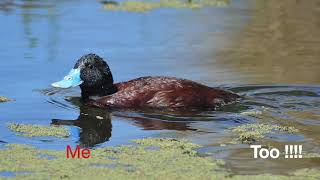
Open Letter to the Victorian Government has been sent as a video to express our views and concerns about this coming duck season. Have a look for your information
- The Mallee has come to Carapooee West
This morning 7.25am at the bird feeder (for the magpies and white-winged choughs- and the crested pigeons and the magpie-larks!), a sole Pied Butcherbird, denizen of the Mallee. I believe he or she has been around for a couple of days , observing. It's not only humans who observe other species and their behaviour. Having worked out the routine, the bird followed me to the next feeder, then the next but was a little overwhelmed by the numbers of other birds including belligerent and raucous cockies. After 3 days of gale-force southerly winds, this bird is unlikly to have hitched a ride that way. The last sighting of a Pied Butcherbird, 7 or 8 years ago, in the area was after several days of strong northerlies. Will this bird stay? Will it be joined by others fleeing the no-food situation further north? What will our resident Grey Butcherbirds think about this?