


Updated: Feb 9
Autumn brings a shortage of water and food supplies in the bush and we see an influx of birds into gardens where these 2 commodities are available.
On the left is the "owner" of the birdbath, year -round inhabitant of creeklines, the New Holland Honeyeater Phylidonyris novaehollandiae.
In the front we have year-round inhabitant of River Redgums, the White-plumed Honeyeater Lichenstomus penicillatus.
The interloper at the back right is the Yellow-tufted Honeyeater Lichenostomus melanops whose usual habitat is the higher Ironbark ridges.
All managed to get a drink and a quick flip in the water but the truce was short-lived and the poor old Yellow-tufted Honeyeater was chased away.

Updated: Feb 9
Other places get autumn colours in the trees- ours remain dull, dun and dusty grey-green. The end of Summer is a hard, dry time with everyone looking for water and food; the arrivals at the bird baths show the change of season as surely as falling autumn-toned leaves. Even when the weather is still hot ,you know that Autumn has arrived with the appearance of these three birds. Zipping through the shrubs where it is feeding on eremophila flowers, the Eastern Spinebill is like a small missile. The amount of energy this tiny bird expends in flying, foraging and yelling out about it means frequent rest periods!

Taking a spell from hunting insects, this Grey Fantail catches the early morning sun.

A rival to the territory- the bird in the mirror is an aggravation for this beautiful male Golden Whistler, his whipcrack notes setting off the male Superb Fairy-wrens who think he is a challenge to them.

Updated: Feb 9
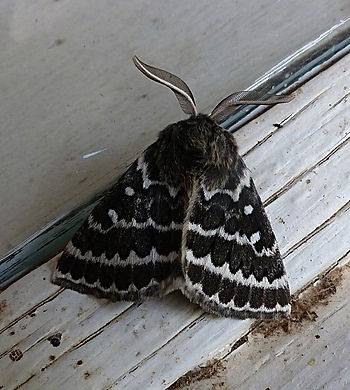
After many weeks with very little moth activity at night, the last bit of rain (5mm here) has caused a rash of interesting creatures coming to the kitchen window- lacewings, green and brown, moths ranging in size from 4mm up to the whopping Ghost Moth (Trictena sp) at 95mm and click beetles of different sorts. Although these moths were photographed during the day, they are night-flying and come readily to a light source.
Many of our moths and other insects have no common names and there are many species still to be discovered and described.
I photographed the Toothed Anthelid Moth- Anthela denticulata on the windowsill at home- the beautiful antennae indicate that this is a male
Another stunner is Thalaina clara-Blotched Satin Moth- with its silky white wings and orange and black lattice pattern. Its underwings are also silky white with two large blotches of black and orange,hence the name.


Another moth wearing the white,orange and black livery is Utetheisa pulchelloides, a Noctuid Moth with no common name that I could find.
